
Community College to UC · Regions · San Francisco Bay Area
Choosing a San Francisco Bay Area Community College:Cost of Living, Chinese Community, Safety, and Transportation
The Bay Area has many community colleges and broad public transit coverage, so students can attend without a car, but rents in every county are above the statewide level. It suits students with a larger budget who are aiming for UC Berkeley or other Northern California campuses and who are willing to choose housing based on commuting routes.
- Community colleges
- 25, 2 with on-campus housing
- UC admits, 2024-25
- 6,998 across all colleges
- Fair market rent, one-bedroom
- $1,876 to $3,003 per month
- Asian residents (by county)
- 5.8% to 44.0%
- Violent crime rate, 2025
- 414.0 per 100,000 residents (statewide 429.8)
- UC undergraduate campuses in the region
- UC Berkeley
The 25 community colleges in San Francisco Bay Area
Sorted by the number of students admitted to UC in 2024-25. Tuition, proof of funds, and housing come from each college page. Select a college name for details on its honors program, international application, and housing.
| College | City | UC admits | International tuition per unit | I-20 proof of funds | On-campus housing |
|---|---|---|---|---|---|
| De Anza CollegeTAP | Cupertino | 1,402 | $284 / quarter unit | $27,189 | — |
| Diablo Valley College | Pleasant Hill | 994 | $447 | $30,495 | No |
| Foothill CollegeTAP | Los Altos Hills | 430 | $284 / quarter unit | $27,189 | — |
| City College of San FranciscoTAP | San Francisco | 363 | $455 | $32,000 | No |
| Ohlone College | Fremont | 362 | $426 | $24,900 | No |
| Las Positas CollegeTAP | Livermore | 348 | $425 | $23,650 | No |
| College of San MateoTAP | San Mateo | 340 | $441 | $32,500 | No |
| Berkeley City College | Berkeley | 334 | $447 | $25,970 | — |
| Santa Rosa Junior College | Santa Rosa | 280 | $457 | $36,705 | Yes |
| West Valley CollegeTAP | Saratoga | 244 | $427 | $27,000 | No |
| Chabot College | Hayward | 227 | $425 | $23,866 | No |
| College of Marin | Kentfield | 179 | $458 | $33,170 | No |
| Skyline CollegeTAP | San Bruno | 171 | $441 | $32,500 | No |
| Solano Community College | Fairfield | 171 | $420 | $36,324 | No |
| Los Medanos CollegeTAP | Pittsburg | 167 | $447 | $30,495 | No |
| College of Alameda | Alameda | 143 | $447 | $25,970 | No |
| Evergreen Valley College | San Jose | 142 | $389 + $46 enrollment fee | $24,000 | No |
| Laney College | Oakland | 118 | $447 | $25,970 | No |
| Contra Costa College | San Pablo | 104 | $447 | $30,495 | No |
| Napa Valley College | Napa | 104 | $541 | $32,866 | Yes |
| Cañada CollegeTAP | Redwood City | 102 | $441 | $32,500 | No |
| San José City College | San Jose | 96 | $389 + $46 enrollment fee | $27,500 | No |
| Mission CollegeTAP | Santa Clara | 89 | $427 | $26,300 | No |
| Gavilan College | Gilroy | 47 | $416 | $32,000 | No |
| Merritt College | Oakland | 41 | $447 | $25,970 | No |
UC admits is the number of students from each college admitted to at least one UC campus (UC Information Center, 2024-25). TAP marks members of the UCLA Transfer Alliance Program. Tuition follows each college page: quarter-system colleges charge per quarter unit, and some colleges list the enrollment fee separately. A dash means the college page does not list the item.
Students attending community college in the San Francisco Bay Area have many colleges to choose from, and BART, Caltrain, and county transit systems form a network that lets students get to class without a car. Housing costs are high, however, and the median rent in all nine counties is above the statewide level. The region suits students with a larger budget who are aiming for UC Berkeley or other Northern California campuses, or who want to live in Silicon Valley or around San Francisco. Bay Area community colleges belong to several different districts, and their housing arrangements, student transit passes, and academic calendars (semester or quarter) vary considerably, so check each college individually when choosing. The data section at the bottom of this page lists rents, population makeup, and crime data for each county.
Where to Live While Attending Community College in the San Francisco Bay Area
Most Bay Area community colleges have no on-campus housing. Chabot College’s international student housing page states that, like most community colleges, the college does not provide residence halls. International students usually live with a homestay family or share an off-campus rental with other students. A few colleges provide housing within the college system:
- De Anza College and Foothill College: The Foothill-De Anza Community College District owns shared-apartment student housing in Cupertino. Foothill College’s page states that rent is based on a 12-month lease, not a 10-month academic year.
- Santa Rosa Junior College: The Santa Rosa campus has a student residence hall for 352 students.
- Napa Valley College: The River Trail Village student housing is next to campus.
- Chabot College: The college has no residence halls of its own, but it partners with CSU East Bay, also in Hayward, so that full-time students can live in the residence halls on the CSU East Bay campus.
When deciding between a homestay and renting on your own, Foothill College’s advice is a useful reference: students who have never lived abroad, or who are under 18, should ideally live with a homestay family for the first 3 months. When renting on your own, rent tends to be higher the closer you are to the college. Foothill College does not recommend that students who rely on transit rent in San Jose, because the bus ride to campus is too long. For other colleges’ housing arrangements and homestay agencies, see the student life section of each college page.
The Bay Area is one of the regions with the highest share of Asian residents in the state. Census Bureau QuickFacts reports only the overall Asian share and does not list Chinese residents separately. In the population table below, Milpitas and Cupertino have the highest Asian shares, and Fremont is also relatively high; in the three North Bay counties of Marin, Napa, and Sonoma, the Asian share is below the statewide level.
Transportation in the San Francisco Bay Area: Getting to Class Without a Car
The backbone of Bay Area transit is two rail systems. BART operates in five counties, San Francisco, San Mateo, Alameda, Contra Costa, and Santa Clara, with 50 stations in total, and currently reaches Millbrae, Richmond, Antioch, Dublin/Pleasanton, and Berryessa/North San José. Caltrain runs down the San Francisco Peninsula through the South Bay to San Jose and Gilroy, with transfers to BART at Millbrae station. Each county also has its own bus system: VTA in Santa Clara County, AC Transit in the East Bay, SamTrans in San Mateo County, Muni in San Francisco, and County Connection in central Contra Costa County.
The Clipper card is the Bay Area’s common transit card and can be used to pay on 24 transit systems, including BART, Muni, Caltrain, and SamTrans. Students ages 5 to 18 can apply for a youth Clipper card by showing an ID that proves their age, and BART gives youth card holders half off fares.
Many community colleges provide transit passes for students, with different eligibility rules:
- VTA SmartPass: An annual institutional pass from VTA that is not sold to individuals; students ride VTA buses and light rail without limit. The 2026 list of participating institutions includes the Foothill-De Anza district, Mission College, and the San Jose-Evergreen district. Foothill College’s page states that all students have a SmartPass, and Routes 40 and 52 currently run directly to the college.
- AC Transit EasyPass: Students at Berkeley City College and other colleges in the Peralta Community College District who take 6 or more units and pay their student fees (including the transit fee) can get an EasyPass, which allows unlimited rides on AC Transit local and Transbay routes. The district’s page states that the transit fee is $50 in the first year and $53 after that; rely on the latest official information.
- SamTrans free pass: SamTrans and the San Mateo County Community College District offer 5,000 free unlimited-ride bus passes to eligible students on a first-come, first-served basis. The passes are available at College of San Mateo, Skyline College, and Cañada College.
- Other North Bay and East Bay colleges: Santa Rosa Junior College students ride Santa Rosa CityBus, Sonoma County Transit, and Petaluma Transit free through the student transportation fee, and the student price for a 31-day SMART train pass is $50. Students at Las Positas College taking 6 or more units pay a $9 transit fee each semester ($8 for fewer than 6 units, with no fee in summer) and ride Wheels buses free with the current semester’s sticker.
Foothill College’s page explains that the Bay Area has three airports with both international and domestic flights, SFO, San Jose International Airport (SJC), and Oakland Airport (OAK), and most flights to the Bay Area land at SFO. The BART station is inside the SFO International Terminal, about 30 minutes from downtown San Francisco. Oakland Airport also has a BART station; the ride from the airport to Coliseum station takes about 9 minutes, where riders transfer to other lines. BART now calls this airport Oakland San Francisco Bay Airport.
Transferring to UC from the San Francisco Bay Area: Nearby Campuses
The Bay Area has two UC campuses, but only UC Berkeley admits undergraduate transfer students. UCSF’s official website states that it is the only one of the University of California’s ten campuses dedicated exclusively to graduate and professional education. Berkeley City College is in downtown Berkeley, a short walk from the Downtown Berkeley BART station, and students in the East Bay’s Peralta district can also use their EasyPass to ride AC Transit Transbay routes to and from San Francisco.
Two other campuses are near the Bay Area. One is UC Santa Cruz to the south: Santa Cruz METRO’s Highway 17 Express runs from San Jose Diridon station (a Caltrain station) to Santa Cruz. The other is UC Davis to the northeast of the Bay Area. Different target campuses have different prerequisite requirements, so when choosing a community college, first confirm that the prerequisites for your target major can all be completed at that college.
CC2UC advice: Students who need housing within the college system can look first at De Anza, Foothill, Santa Rosa Junior College, Napa Valley College, and Chabot College, and should apply early. Students who do not drive should give priority to colleges with transit passes and then look for housing in the cities the pass covers, rather than comparing rents alone. Students aiming for UC Berkeley can consider both the Peralta district colleges in the East Bay and the large community colleges on the Peninsula and in the South Bay; what matters is the major prerequisites and GPA, and the college’s location does not by itself determine admission results. Foothill and De Anza use the quarter system, which follows a different course schedule from most semester-system colleges, so learn how units convert before enrolling.
Rent, population, and safety data for San Francisco Bay Area
Rent
Fair Market Rent is the standard the U.S. Department of Housing and Urban Development sets for rental assistance. It is roughly the 40th percentile rent for a typical local rental and includes basic utilities. Median rent is the Census Bureau figure for what all renters actually pay, including leases signed years ago. Both are calculated by county or city, so current listings near a college may be higher.
| County | Studio | One-bedroom | Two-bedroom | Median rent |
|---|---|---|---|---|
| Santa Clara County | $2,458 | $2,778 | $3,272 | $2,857 |
| Alameda County | $2,088 | $2,290 | $2,805 | $2,357 |
| Contra Costa County | $2,088 | $2,290 | $2,805 | $2,375 |
| San Francisco County | $2,574 | $3,003 | $3,697 | $2,476 |
| San Mateo County | $2,574 | $3,003 | $3,697 | $2,922 |
| Sonoma County | $1,980 | $2,155 | $2,819 | $2,158 |
| Solano County | $1,706 | $1,876 | $2,342 | $2,163 |
| Marin County | $2,574 | $3,003 | $3,697 | $2,668 |
| Napa County | $2,350 | $2,580 | $3,375 | $2,237 |
| California statewide | — | — | — | $2,036 |
Fair market rents are HUD fiscal year 2027 standards (effective October 1, 2026), per month, in U.S. dollars. Counties in the same metropolitan area share one standard. Median rent is from the Census Bureau ACS 2020-2024 five-year estimates.
Population
Census Bureau QuickFacts reports the share of Asian residents but does not list Chinese residents separately. The table below lists the cities where the colleges are located, plus several nearby cities where students often live, sorted by the share of Asian residents.
| City | Community colleges in the city | Asian residents | Foreign born | Language other than English at home | Median rent |
|---|---|---|---|---|---|
| Milpitas | — | 72.1% | 55.4% | 70.6% | $3,120 |
| Cupertino | De Anza | 70.9% | 55.0% | 62.3% | $3,500+ |
| Fremont | Ohlone | 63.8% | 51.1% | 64.2% | $2,933 |
| Saratoga | WVC | 59.5% | 46.3% | 50.8% | $3,500+ |
| Dublin | — | 55.2% | 40.8% | 49.1% | $3,191 |
| Santa Clara | Mission College | 50.4% | 46.4% | 57.1% | $3,016 |
| San Ramon | — | 49.7% | 38.6% | 46.8% | $2,968 |
| Sunnyvale | — | 49.6% | 50.2% | 60.5% | $3,039 |
| Pleasanton | — | 43.9% | 36.3% | 43.6% | $3,060 |
| San Jose | EVC, SJCC | 39.5% | 42.0% | 58.9% | $2,669 |
| San Francisco | CCSF | 35.2% | 34.0% | 43.6% | $2,476 |
| San Bruno | Skyline College | 31.7% | 35.9% | 45.7% | $2,773 |
| Hayward | Chabot College | 30.5% | 43.4% | 61.8% | $2,391 |
| Alameda | COA | 28.8% | 25.7% | 34.5% | $2,474 |
| San Mateo | CSM | 28.3% | 36.2% | 46.6% | $3,077 |
| Berkeley | BCC | 20.5% | 21.1% | 30.7% | $2,133 |
| Pittsburg | LMC | 19.7% | 32.0% | 49.8% | $2,264 |
| Redwood City | Cañada College | 18.3% | 32.9% | 46.5% | $2,968 |
| Fairfield | SCC | 18.1% | 23.3% | 35.9% | $2,266 |
| Livermore | LPC | 17.1% | 19.7% | 26.4% | $2,677 |
| Pleasant Hill | DVC | 16.9% | 18.8% | 23.6% | $2,533 |
| Oakland | Laney College, Merritt College | 15.8% | 27.5% | 40.3% | $1,979 |
| San Pablo | CCC | 14.9% | 44.2% | 67.4% | $2,018 |
| Gilroy | Gavilan College | 9.4% | 24.3% | 45.9% | $2,301 |
| Santa Rosa | SRJC | 6.5% | 21.2% | 35.0% | $2,152 |
| Kentfield | COM | 5.2% | 12.8% | 13.6% | $2,741 |
| Napa | NVC | 3.0% | 20.9% | 34.7% | $2,282 |
| County | Population | Asian residents | Foreign born | Language other than English at home |
|---|---|---|---|---|
| Santa Clara County | 1,914,391 | 44.0% | 41.5% | 55.2% |
| Alameda County | 1,636,630 | 36.3% | 34.7% | 47.2% |
| Contra Costa County | 1,170,070 | 22.3% | 26.6% | 37.5% |
| San Francisco County | 826,079 | 36.3% | 34.0% | 43.6% |
| San Mateo County | 743,568 | 34.4% | 35.7% | 45.8% |
| Sonoma County | 486,444 | 5.8% | 16.8% | 27.0% |
| Solano County | 455,376 | 18.2% | 20.8% | 31.5% |
| Marin County | 253,694 | 7.4% | 19.6% | 23.9% |
| Napa County | 132,949 | 9.6% | 22.2% | 34.2% |
| California statewide | 39,355,309 | 17.5% | 27.0% | 44.4% |
Population is the estimate for July 1, 2025. The Asian share counts residents who reported Asian alone. Foreign born and language figures are ACS 2020-2024 five-year estimates, and language covers residents age 5 and older. Source: U.S. Census Bureau QuickFacts. Los Altos Hills has too few residents to appear in QuickFacts and is not listed.
Safety
The table below shows crimes each county reported to the California Department of Justice in 2025, per 100,000 residents. The Department of Justice notes that population makeup and density, commuters, economic conditions, law enforcement staffing, and residents' willingness to report all affect local counts, so comparisons between places should take these differences into account. After choosing a college, review its annual campus security report and ask about campus police evening escort services.
| County | Violent crime rate | Compared with the state | Property crime rate | Compared with the state |
|---|---|---|---|---|
| Santa Clara County | 359.1 | 0.8 times the state rate | 2216.2 | 1.2 times the state rate |
| Alameda County | 644.0 | 1.5 times the state rate | 3218.5 | 1.8 times the state rate |
| Contra Costa County | 358.9 | 0.8 times the state rate | 1731.1 | About the same as the state |
| San Francisco County | 480.9 | 1.1 times the state rate | 2963.3 | 1.7 times the state rate |
| San Mateo County | 221.9 | 0.5 times the state rate | 1364.4 | 0.8 times the state rate |
| Sonoma County | 246.9 | 0.6 times the state rate | 1056.4 | 0.6 times the state rate |
| Solano County | 478.6 | 1.1 times the state rate | 1909.0 | 1.1 times the state rate |
| Marin County | 182.5 | 0.4 times the state rate | 1230.8 | 0.7 times the state rate |
| Napa County | 297.2 | 0.7 times the state rate | 1024.0 | 0.6 times the state rate |
| San Francisco Bay Area total | 414.0 | About the same as the state | 2214.2 | 1.2 times the state rate |
| California statewide | 429.8 | — | 1780.5 | — |
Crimes per 100,000 residents, calculated by CC2UC from California Department of Justice 2025 reported crimes (Crimes and Clearances, all law enforcement agencies in each county) divided by California Department of Finance population estimates for January 1, 2025. Violent crime includes homicide, rape, robbery, and aggravated assault. Property crime includes burglary, motor vehicle theft, and larceny-theft.
Transportation
- Rail transit
- BART operates in five counties, San Francisco, San Mateo, Alameda, Contra Costa, and Santa Clara, with 50 stations in total.
- Commuter rail
- Caltrain runs down the San Francisco Peninsula through the South Bay to San Jose and Gilroy, with transfers to BART at Millbrae station.
- Transit card
- The Clipper card can be used to pay on 24 Bay Area transit systems, including BART, Muni, Caltrain, and SamTrans; riders ages 5 to 18 can get a youth card, and BART gives youth card holders half off fares.
- Student passes
- Foothill College students ride VTA buses and light rail in Santa Clara County without limit with the VTA SmartPass; Peralta district students taking 6 or more units can get the AC Transit EasyPass.
- International airport
- Most flights to the Bay Area arrive at SFO, where the BART station is inside the International Terminal, about 30 minutes from downtown San Francisco.
| County | Average one-way commute |
|---|---|
| Santa Clara County | 26.2 minutes |
| Alameda County | 31 minutes |
| Contra Costa County | 35.3 minutes |
| San Francisco County | 30.4 minutes |
| San Mateo County | 26.4 minutes |
| Sonoma County | 25.1 minutes |
| Solano County | 31 minutes |
| Marin County | 27.4 minutes |
| Napa County | 24.9 minutes |
| California statewide | 28.7 minutes |
Average one-way travel time to work for employed residents age 16 and older, all modes combined. Census Bureau ACS 2020-2024 five-year estimates.
Choosing a San Francisco Bay Area Community College: Frequently Asked Questions
Which San Francisco Bay Area community colleges have student housing?
Most Bay Area community colleges have no on-campus housing. According to each college's official website, the Foothill-De Anza district owns shared-apartment student housing in Cupertino that Foothill College and De Anza College students can apply for; Santa Rosa Junior College has a residence hall on its Santa Rosa campus for 352 students; and Napa Valley College has the River Trail Village student housing next to campus. Chabot College has no housing of its own, but it partners with CSU East Bay so that full-time students can live in the residence halls on the CSU East Bay campus. Students at other colleges usually live with a homestay family or share an off-campus rental.
Can a student attend a Bay Area community college without a car?
Yes, but choose housing based on the transit coverage around the college. BART and Caltrain connect the Bay Area's major cities, and each county also has its own transit system. Many colleges provide transit passes for students: Foothill College's page states that all students can use the VTA SmartPass; Peralta district students taking 6 or more units can get the AC Transit EasyPass; and Santa Rosa Junior College students ride three local transit systems free through the student transportation fee. Foothill College cautions that students who rely on transit should not rent in San Jose, because it is too far away.
The Bay Area has two UC campuses. Can community college students transfer to both?
No. The UC campuses in the Bay Area are UC Berkeley and UCSF. UCSF's official website states that it is the only one of the University of California's ten campuses dedicated exclusively to graduate and professional education, and it does not admit undergraduates, so the Bay Area transfer target for community college students is UC Berkeley. Nearby are UC Santa Cruz to the south and UC Davis to the northeast.
Which airport should international students fly into for a Bay Area community college?
Foothill College's international student page explains that the Bay Area has three airports with both international and domestic flights: San Francisco International Airport (SFO), San Jose International Airport (SJC), and Oakland Airport (OAK), and most flights to the Bay Area land at SFO. BART has stations at the SFO International Terminal and at Oakland Airport. For students heading to the North Bay, Santa Rosa Junior College recommends taking the Groome Transportation shuttle from SFO or OAK to Santa Rosa, which costs $51 and takes about two hours.
Sources and Verification Date26 official sources · Last checked November 18, 2026
- FY 2027 Fair Market Rents (HUD USER, U.S. Department of Housing and Urban Development), effective October 1, 2026huduser.gov
- QuickFacts (U.S. Census Bureau): population estimates for July 1, 2025; other figures from ACS 2020-2024 five-year estimatescensus.gov
- Crimes and Clearances 1985-2025 (California Department of Justice OpenJustice)openjustice.doj.ca.gov
- E-1 Population Estimates for Cities, Counties, and the State, January 1, 2025 and 2026 (California Department of Finance)dof.ca.gov
- Admissions by source school (UC Information Center)universityofcalifornia.edu
- About BART (Bay Area Rapid Transit)bart.gov
- Discounts (Bay Area Rapid Transit)bart.gov
- Airport Connections (SFO & OAK) (Bay Area Rapid Transit)bart.gov
- Oakland San Francisco Bay Airport (OAK) (Bay Area Rapid Transit)bart.gov
- About Caltrain (Caltrain)caltrain.com
- Discounts (Clipper)clippercard.com
- Public Transit (San Francisco International Airport)flysfo.com
- SmartPass (Santa Clara Valley Transportation Authority)vta.org
- EasyPass Program (AC Transit)actransit.org
- Peralta EasyPass (Peralta Community College District)peralta.edu
- College Service (SamTrans)samtrans.com
- About Us (County Connection)countyconnection.com
- Admitted Students (Foothill College International Student Program)foothill.edu
- Transportation (Santa Rosa Junior College International Student Program)international.santarosa.edu
- SRJC Student Housing (Santa Rosa Junior College)housing.santarosa.edu
- Student Housing/River Trail Village (Napa Valley College)napavalley.edu
- International Students Housing (Chabot College)chabotcollege.edu
- Fees (Las Positas College)laspositascollege.edu
- Visit Our Campus (Berkeley City College)berkeleycitycollege.edu
- About UCSF (UC San Francisco)ucsf.edu
- Highway 17 Express to San Jose (Santa Cruz METRO)scmetro.org
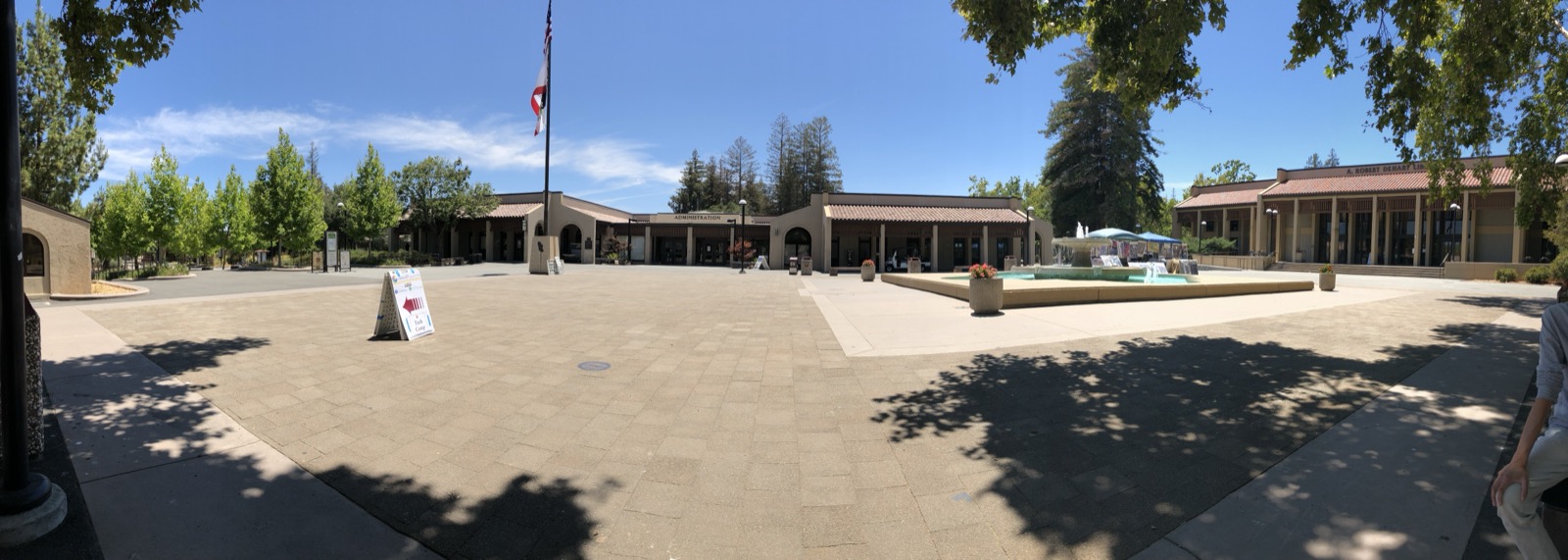
Header photo: De Anza College, FASTILY, CC BY-SA 4.0, original.
Rent, population, and crime data are updated every year, and transit fares and college housing also change. Before you go, confirm the latest information published by each agency and college.